
Introduction
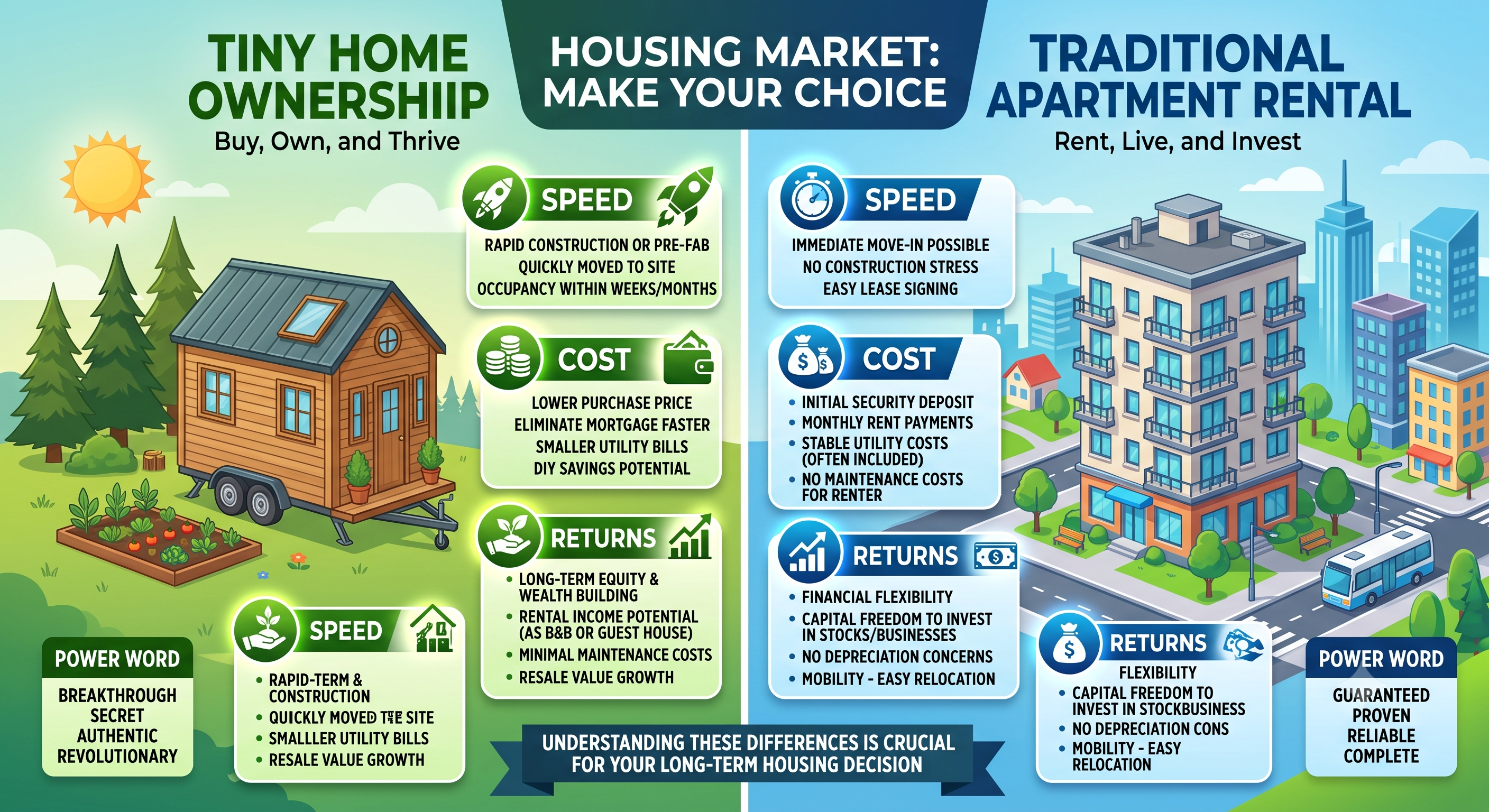
The housing market presents prospective residents with a fundamental choice: pursue tiny home ownership or rent a traditional apartment. Both options come with distinct advantages and trade-offs when examining speed, cost, and returns. Understanding these differences is crucial for anyone making a long-term housing decision. Whether you prioritize rapid occupancy, budget constraints, or financial growth, this comparison will help clarify which path aligns with your goals.
Speed and Cost: Building Tiny Homes vs Renting Apartments
Construction and Occupancy Timeline
Tiny homes have gained popularity partly because of their faster construction timelines. A typical tiny home, ranging from 300 to 500 square feet, can be completed in 3 to 6 months under ideal conditions. Modular tiny homes built in factories may reach occupancy in as little as 8 to 12 weeks. This rapid deployment appeals to those seeking immediate housing solutions.
Apartment rentals, by contrast, offer near-instant occupancy. Once approved by a landlord and lease signed, you can move in within days or weeks. There is no waiting for construction, permits, or inspections. For those needing housing urgently, renting provides unmatched speed.
Upfront Financial Investment
The cost comparison between tiny homes and apartments reveals stark differences in initial expenditure.
Tiny home ownership typically requires:
- Purchase price: $30,000 to $60,000 for basic models; luxury versions exceed $100,000
- Land acquisition or lease: $10,000 to $50,000+ depending on location
- Permits and inspections: $2,000 to $5,000
- Foundation and utilities: $5,000 to $15,000
- Total initial investment: $50,000 to $200,000+
Apartment rentals demand significantly less upfront capital:
- First month’s rent: $800 to $2,500 depending on location and size
- Security deposit: One month’s rent
- Utility deposits: $100 to $300
- Moving expenses: $500 to $2,000
- Total initial outlay: $2,500 to $6,500
For renters with limited savings, apartments present an accessible entry point into independent housing. Tiny homes require substantial capital, making them accessible primarily to those with savings or financing options.
Monthly Housing Expenses
Ongoing costs paint another important picture. Tiny home ownership includes:
- Mortgage payments (if financed): $300 to $800 monthly
- Property taxes: $100 to $400 monthly
- Maintenance and repairs: $100 to $300 monthly
- Insurance: $50 to $150 monthly
- Utilities: $80 to $200 monthly
- Total monthly cost: $630 to $1,850
Apartment living typically costs:
- Rent: $800 to $2,500 monthly
- Renters insurance: $10 to $25 monthly
- Utilities: $80 to $200 monthly
- Total monthly cost: $890 to $2,725
While apartments may appear more expensive monthly, tiny home ownership involves hidden costs that accumulate. Major repairs—roof replacements, foundation work, or system upgrades—can devastate budgets, whereas landlords typically cover these in rental properties.
Maximizing Returns: Investment Potential in Housing Options
Building Equity Through tiny home ownership
Tiny home ownership functions as a wealth-building vehicle. Each mortgage payment builds equity rather than enriching a landlord. Over 15 to 30 years, a $50,000 tiny home appreciates in value, particularly in desirable locations. Owners can leverage this equity for future investments or refinancing.
The return on investment for tiny homes varies by location:
- Rural areas: 3% to 5% annual appreciation
- Suburban regions: 5% to 7% annual appreciation
- Urban and high-demand areas: 7% to 10%+ annual appreciation
A $50,000 tiny home in a growing market might appreciate to $75,000 or more over a decade, representing a $25,000 gain beyond mortgage payments already made.
Rental Market Opportunities
Tiny home owners can generate income through rental returns. The tiny home rental market has exploded as travelers and budget-conscious renters seek affordable accommodations. Owners can charge $50 to $150 nightly or $1,000 to $3,000 monthly, depending on location and amenities.
A tiny home generating $2,000 monthly rental income ($24,000 annually) on a $50,000 investment yields a 48% annual return—substantially higher than traditional real estate. Even accounting for maintenance, utilities, and vacancy periods, rental returns often exceed 20% to 30% annually.
Apartments, conversely, offer no equity building for renters. Monthly payments vanish once paid, with no residual asset accumulation. Renters cannot leverage housing investments for future financial goals.
Long-Term Wealth Accumulation
Over a 30-year horizon, tiny home ownership creates substantial wealth:
- A $50,000 tiny home appreciating 6% annually reaches $287,000
- Mortgage payments invested equity add $100,000 to $200,000
- Rental income accumulated and invested multiplies returns
- Total potential wealth: $400,000 to $500,000+
Apartment renters accumulate no housing-related wealth. The same 30-year period involves $288,000 to $1,000,000 in rent payments with zero asset ownership.
Risk Considerations
Tiny homes carry ownership risks:
- Market downturns reduce property values
- Maintenance emergencies drain savings
- Zoning restrictions limit placement options
- Resale challenges in some markets
- Financing difficulties compared to traditional homes
Apartments shift risk to landlords:
- Renters face rent increases over time
- Lease non-renewal forces relocation
- Limited control over living conditions
- No wealth accumulation
- Vulnerability to housing market volatility
Conclusion
The choice between tiny homes and apartments depends on individual priorities. Renters prioritizing speed and flexibility benefit from apartments’ immediate occupancy and minimal upfront costs. However, they sacrifice long-term wealth building.
Tiny home ownership requires greater initial investment and longer timelines but delivers substantial returns through appreciation and potential rental income. Those viewing housing as a long-term investment find tiny homes compelling.
Consider your financial situation, timeline, and goals. If you have capital and plan to stay in one location, tiny homes offer superior returns. If you prioritize flexibility and minimal upfront expense, apartments remain practical. Ultimately, informed decision-making based on your unique circumstances ensures housing satisfaction and financial security.


